7 Breakthrough Anti-Aging Technologies: What’s Real, What’s Hype, and What Might Change the Future
- Reduced oxidative stress
- Slower markers of cellular aging in lab settings
However:
- No large human trials
- No approved therapeutic applications
- Effects demonstrated primarily in laboratory models
This is early-stage biochemistry — not a commercially viable anti-aging treatment.
6. “Young Blood” & Plasma Therapy

Experiments connecting the circulatory systems of young and old mice (parabiosis) showed improvements in neurogenesis and muscle repair in older animals. Some findings were published in Cell Reports.
However, in 2019 the U.S. Food and Drug Administration issued a public warning against using plasma from young donors as an anti-aging therapy.

Key facts:
- No proven anti-aging benefit in humans
- Potential health risks
- Not FDA-approved for longevity
The commercial “young plasma” clinics that briefly emerged in the U.S. were heavily criticized by regulators and scientists.
7. NAD⁺, NMN & the Search for an “Anti-Aging Pill”
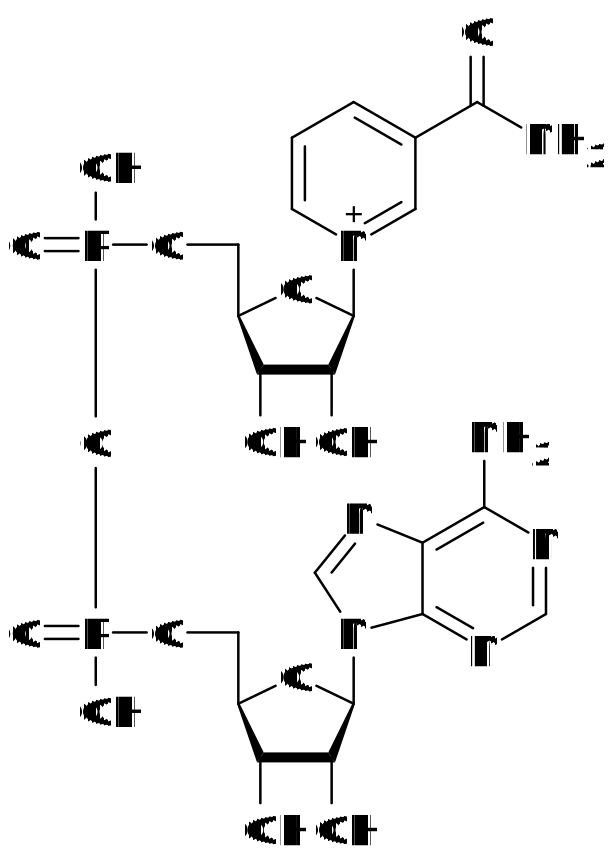
NAD⁺ is a coenzyme critical for energy metabolism and DNA repair. Levels decline with age.

Researchers at Harvard Medical School have shown that boosting NAD⁺ levels in mice (via precursors like NMN and NR) improved mitochondrial function and certain age-related markers.